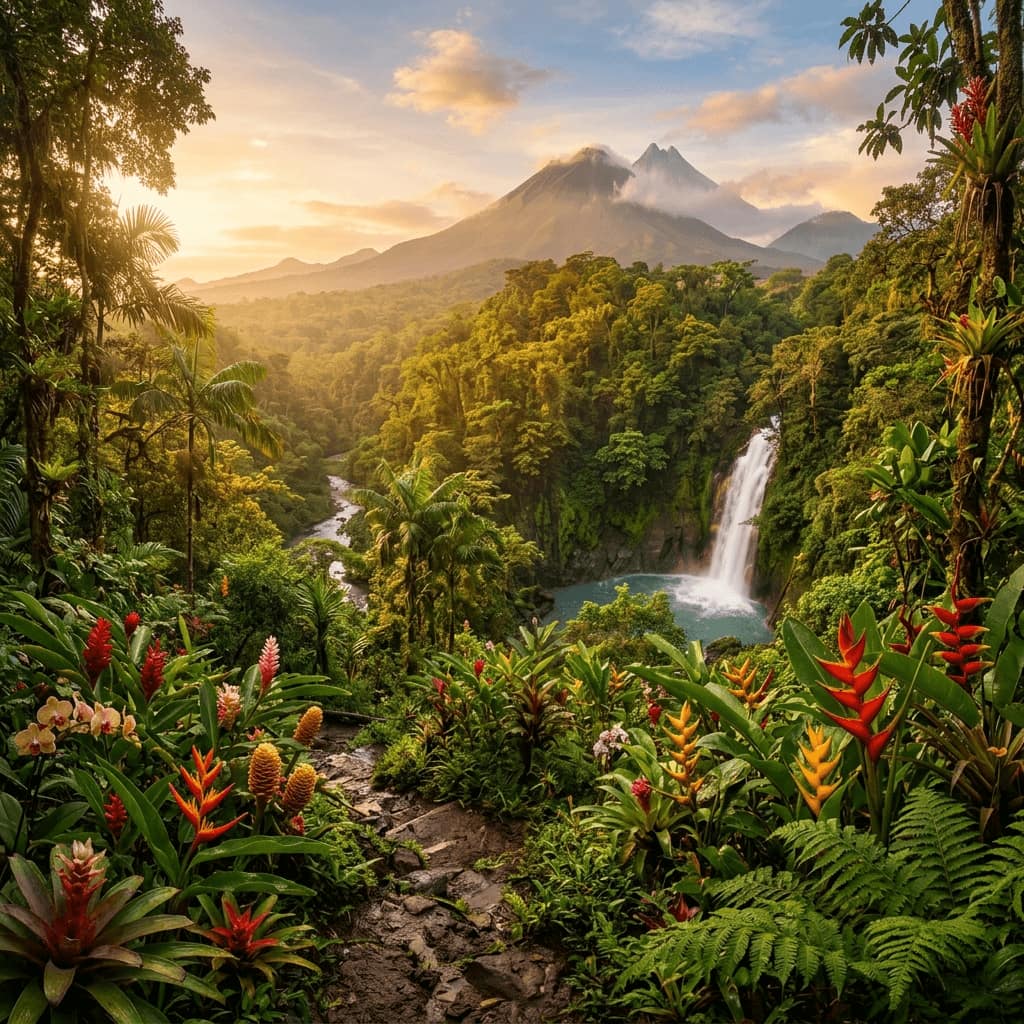
Río Celeste & Tenorio Volcano: Our Local Guide
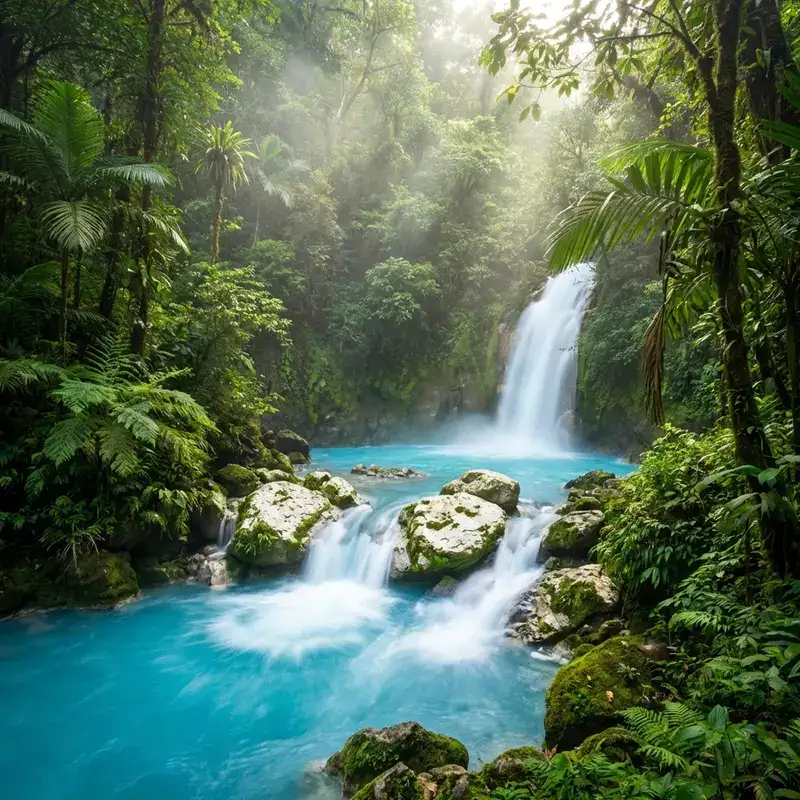
- 6 km — Round-trip trail to the falls
- No filter — The blue is a mineral reaction
- Day trip — From La Fortuna or San José
Why Río Celeste & Tenorio belongs on your itinerary
The first photo of Río Celeste you see looks fake. Then you stand on the bridge over the Teñideros — where two clear streams meet, their minerals react, and the river turns milk-glass turquoise mid-current — and you understand why Ticos put this river on the shortlist of national wonders. Tenorio Volcano National Park around it is primary rainforest with tapir tracks on the trail, and the surrounding Bijagua valley is quietly becoming the country's best sloth-spotting region.
What to do in Río Celeste & Tenorio
- The Río Celeste trail — 6 km round trip through primary forest: waterfall stairs, the Blue Lagoon, bubbling volcanic vents, and the color-change confluence. Our full-day Río Celeste tour covers it with a naturalist guide, lunch and transport.
- The waterfall — 250 steps down to the single most photographed cascade in Costa Rica. Go early; by 10am the platform is an elbow economy.
- Bijagua sloth tour — the farmland canopy around town has one of the densest two- and three-toed sloth populations anywhere.
- Free the afternoon — hot springs on the volcano's north side stay blissfully unvisited.
Getting there
Most guests do Río Celeste as a guided day trip: about 90 minutes from La Fortuna or a full-day loop from San José (transport included in our tour). Overnighting in Bijagua earns you the trail at 8am, before the day-trip wave arrives.
Best time to visit
February–April gives the most reliable blue — heavy rain (especially Sept–Nov afternoons) can turn the river grey-green for a day or two as sediment overwhelms the reaction. Mornings are clearest year-round. If the color matters to your photos, build in a flex day; we track conditions and can swap your tour date.
Where to stay
Bijagua is the base: small lodges and farm stays with volcano views, plus the sloth canopy right outside. Most travelers, though, visit from La Fortuna — the day-trip logistics are easy and the hot springs are waiting back at base.
Insider tips
- Swimming in the river inside the park is prohibited — the swimmable blue water is at Piedra Fina, just outside the boundary. Ask your guide.
- Real shoes, not sandals: the trail mixes boardwalk, mud and 250 wet stairs.
- Park entries are timed and capped — another reason guided beats winging it in high season.
- Rain the night before? Check with us before driving out; we reschedule when the river turns grey.
Río Celeste & Tenorio — questions we get every week
Why is Río Celeste blue?
Is the hike hard?
Can we swim in Río Celeste?
Our tours in Río Celeste & Tenorio
- Rio Celeste Full Day Hike & River Splash — Full Day, from $225
Other Costa Rica destinations
- Tamarindo — Guanacaste’s surf capital
- Puerto Viejo — Afro-Caribbean Costa Rica
- Uvita & the Costa Ballena — The whale coast
- Santa Teresa — End-of-the-road surf town
- Nosara — Wellness meets wilderness
- San José — The capital, honestly told