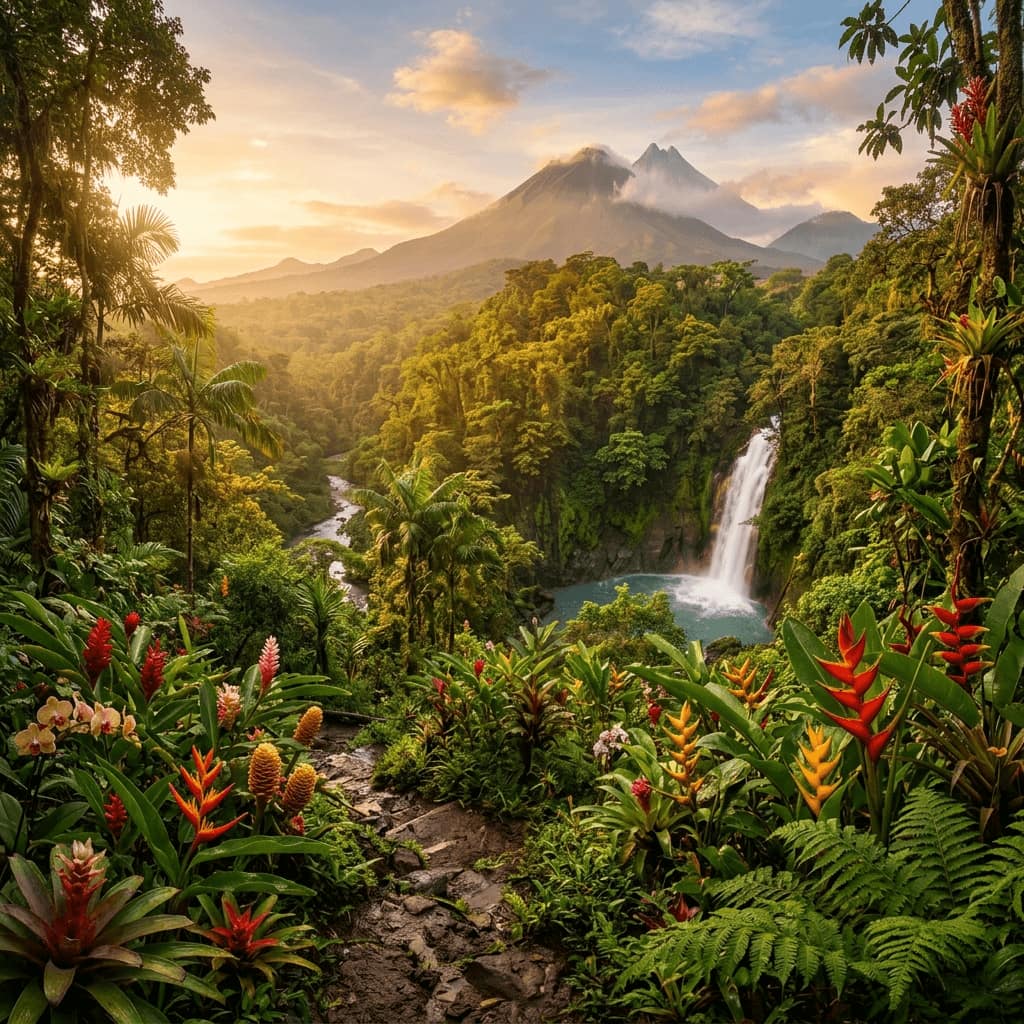
Manuel Antonio National Park: Our Local Guide
Why Manuel Antonio belongs on your itinerary
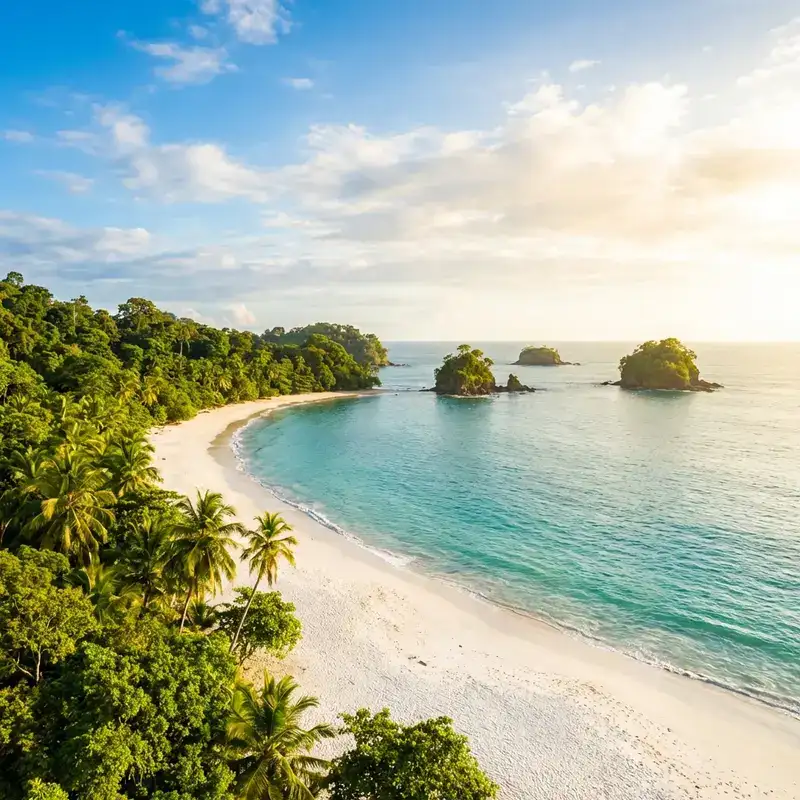
Manuel Antonio National Park covers just 682 hectares — the smallest national park in Costa Rica — yet it consistently ranks as the most visited. The reason is simple: nowhere else in the country does pristine white-sand beach meet dense primary rainforest so completely. You can snorkel the coral reef at Playa Manuel Antonio, then walk 10 metres back into the jungle and find a three-toed sloth hanging in a cecropia tree above your head.
The park sits just outside the town of Quepos, a working fishing port on the central Pacific coast. The 4 km stretch of road between Quepos and the park entrance is lined with hotels, restaurants, and overlooks — some of the finest boutique lodges in Costa Rica cling to the hillside here with Pacific views from every terrace. It's a destination that rewards both the wildlife obsessive and the traveler who simply wants sun, sea, and a cold Imperial at the end of the day.
Our guides lead tours through Manuel Antonio multiple times a week. We know which trail section has the densest sloth activity in the morning, which beach gets the fewest tour groups on any given day, and how to time your visit so the park doesn't feel like a zoo. We'd love to show you the version of Manuel Antonio that most first-time visitors don't find.
What to do in Manuel Antonio
Manuel Antonio National Park & Beaches
A private concierge day from San José to Manuel Antonio National Park and its beaches, including national park entrance, lunch on the shoreline, and enough time to explore at your own pace instead of a rushed group tour.
Nauyaca Waterfalls Horseback Ride
Ride through jungle and across rivers to reach the two-tiered Nauyaca falls — 45 metres of cascading water into a clear swimming pool. One of the most spectacular waterfall experiences in Costa Rica, 45 minutes from Quepos. The horseback access trail is part of the experience.
Quepos Deep Sea Sport Fishing
Quepos is routinely ranked among the top 5 sport fishing destinations in the world. Set sail from Marina Pez Vela for marlin, sailfish, and yellowfin tuna aboard a fully equipped vessel with experienced captains. Offshore and inshore options available.
Birdwatching at Carara National Park
Carara is the transition zone between dry and wet forest — one of the best birding sites in the Americas. Over 400 species recorded, including the scarlet macaw (in flocks of 100+), the boat-billed heron, and the riverside wren. One hour from Manuel Antonio.
Kayaking & Mangrove Tour
Paddle through the Quepos estuary and mangrove channels spotting American crocodiles, herons, and river otters at eye level. The calm water makes this suitable for all ages and fitness levels, and the wildlife density rivals anything inside the national park.
Savegre River White-Water Rafting
The Savegre is one of Costa Rica's cleanest rivers and offers lively Class III rapids through pristine rainforest. A scenic, exhilarating add-on to a beach day in Manuel Antonio — the put-in is about 45 minutes from Quepos toward the mountains.
Getting there
By private transfer: Manuel Antonio is 3.5 hours south of San José via the Costanera (Route 34). This is the most comfortable option — we offer door-to-hotel private transfers from SJO airport with bilingual drivers.
By domestic flight: Sansa and Skyway operate multiple daily flights from SJO to Quepos Airport (XQP) — the 30-minute flight costs $80–120 each way and is worth it for the views over the Pacific coastline. Combine with a private transfer from Quepos airstrip to your hotel (10 minutes).
By shared shuttle: Several operators run shared vans from San José to Manuel Antonio for around $40–50 per person. Journey time is about 3.5–4 hours. A good budget option but not door-to-door.
Best time to visit
The central Pacific dries out significantly from December through April — this is the peak beach season with the best swimming and clearest skies. The green season (May–November) brings daily rain but far fewer crowds, lower prices, and lush vegetation that makes the park strikingly beautiful. Wildlife is present year-round; squirrel monkeys are actually easier to spot in the rainy season when they forage near the trail edges.
Where to stay
On the Quepos–Manuel Antonio road (Route 618): The hillside between Quepos and the park entrance has the best concentration of boutique hotels and eco-lodges, most with Pacific views and pools. Walking distance to the park and restaurants.
Quepos town: More affordable, with a wider range of restaurants and a local atmosphere. About 10 minutes' drive to the park — ideal if you're combining time in town (fishing, nightlife) with park days.
Beachfront at Playa Espadilla Norte: Staying right on the main beach puts you 5 minutes from the park entrance. The trade-off is noise from the road and a strip of mid-range hotels rather than the hilltop boutiques.
Wildlife you'll see
Manuel Antonio has one of the highest concentrations of observable wildlife in Central America — in large part because the animals are habituated to people and remarkably easy to spot with a good guide:
- Three-toed and Two-toed Sloths — seen on almost every morning visit; look up into cecropia and guarumo trees
- White-faced Capuchin Monkeys — highly intelligent and will approach within metres on the beach trail
- Central American Squirrel Monkeys — an endangered species found in small numbers only on the central Pacific coast; Manuel Antonio is one of the best places to see them
- Scarlet Macaws — noisy pairs fly overhead regularly; easiest to spot at dawn and dusk
- American Crocodiles — visible from the bridge over the Río Naranjo on the park access road
- White-tipped Reef Sharks — visible while snorkelling at Playa Manuel Antonio in calm conditions
- Green and Black Poison Dart Frogs — small, vivid, and found on the forest floor near streams
Insider tips
- Book park tickets online through SINAC at least a week ahead during December–April. The park sells out and has no walk-up sales.
- The park is closed every Tuesday — plan your itinerary around this if you're on a tight schedule.
- Arrive at park opening (7 am) for the best wildlife activity and emptiest beaches. The tour buses arrive from 9 am onward.
- Don't leave food unattended on the beach or at the picnic tables — the capuchin monkeys are expert thieves and will unzip bags.
- Playa Biesanz is a secret cove 10 minutes' walk from the park road — rarely crowded, well-sheltered, and beautiful. Ask your guide to take you.
Manuel Antonio — questions we get every week
How do I get from San José to Manuel Antonio?
Is Manuel Antonio suitable for families with kids?
Do you need to book park tickets in advance?
What wildlife can I see in Manuel Antonio?
What is the best beach in Manuel Antonio?
What else is there to do near Quepos?
Our tours in Manuel Antonio
- Manuel Antonio National Park & Beaches — Full Day, from $380
- Quepos Deep Sea Sport Fishing — Full Day, from $249
- Nauyaca Waterfalls Hike — Day Trip or 2 Days with Playa Dominical — 1 or 2 Days, from $225
Other Costa Rica destinations
- Tamarindo — Guanacaste’s surf capital
- Puerto Viejo — Afro-Caribbean Costa Rica
- Uvita & the Costa Ballena — The whale coast
- Río Celeste & Tenorio — The impossibly blue river
- Santa Teresa — End-of-the-road surf town
- Nosara — Wellness meets wilderness