Tortuguero: Sea Turtles & Jungle Canals
Why Tortuguero belongs on your itinerary
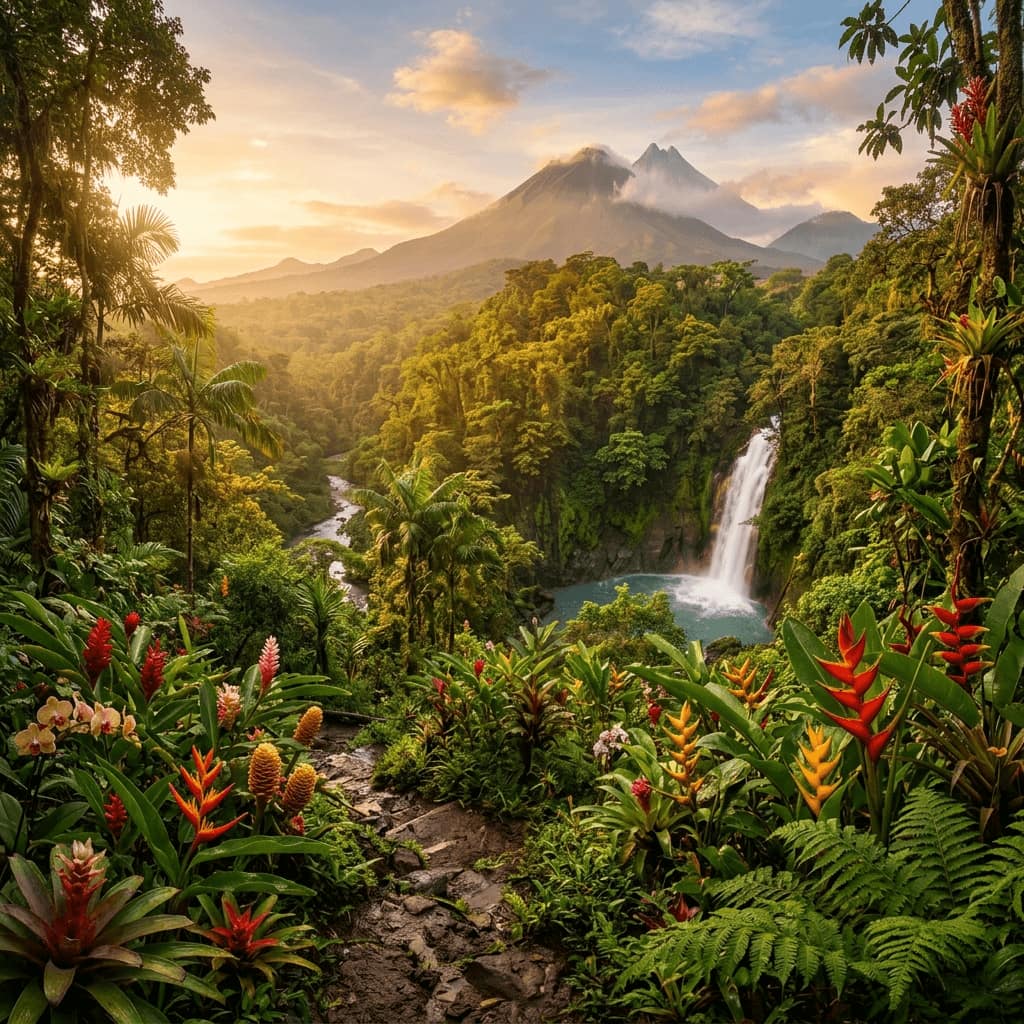
Tortuguero sits on a narrow strip of Caribbean lowland between the sea and an extensive network of jungle canals — it has no road access and no cars. You arrive by boat through the canals, which is appropriate, because the boat is how you experience almost everything here. The 312 km² national park is a maze of waterways lined with primary rainforest; exploring it by motorboat and kayak is one of the most intimate wildlife experiences in Central America.
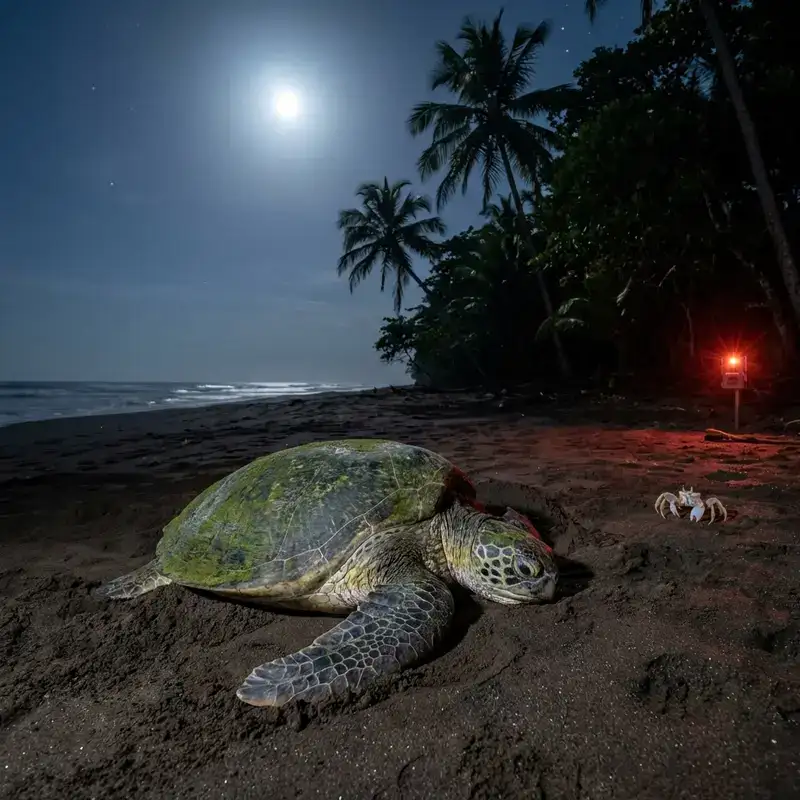
The name comes from tortuga — turtle — and the beach at Tortuguero is the most important green sea turtle nesting site in the entire Caribbean. Between July and October, thousands of female green sea turtles haul themselves onto the beach at night to lay eggs, guided by the same geomagnetic signal that led them here decades ago. Witnessing this on a night walk with a certified guide is one of those travel experiences that stays with you permanently.
Outside turtle season, Tortuguero is still exceptional. The canals are a year-round home to caimans, river otters, West Indian manatees, poison dart frogs, and four species of monkey. Over 400 bird species have been recorded in the park, including the great green macaw — one of the rarest parrots in Central America. The village itself is tiny, car-free, and genuinely unhurried in a way that is increasingly rare in Costa Rica.
What to do in Tortuguero
Green Sea Turtle Nesting Night Tour
A guided night walk on Tortuguero beach during nesting season (July–October) to observe green sea turtles laying eggs. Tours are strictly regulated — maximum group size of 8, red flashlights only, no photography with flash. One of the most emotionally powerful wildlife experiences in Costa Rica.
Jungle Canal Boat Tour
A 3-hour guided motorboat tour through the park's primary canal network with a bilingual naturalist guide. Spot caimans on the banks, sloths in the canopy, river otters surfacing mid-canal, and monkeys leaping between trees. The best single activity at Tortuguero — morning departures catch the most wildlife.
Kayaking the Secondary Canals
The motorboats can't enter the narrower secondary canals — kayaks can. Paddle silently through tunnel-like passages where branches meet overhead and poison dart frogs hop at the water's edge. The most intimate way to experience the Tortuguero canal system and the one experience that separates repeat visitors from first-timers.
Tortuguero Village Walk
The village of Tortuguero is one of the most genuinely local communities in Caribbean Costa Rica — painted wooden houses on stilts, Creole English spoken alongside Spanish, and a church that doubles as the community gathering space. A guided village walk with a local resident provides context that no lodge briefing can match.
Cerro Tortuguero Hike
The small hill (119 m) at the north end of the national park is the only true hiking in Tortuguero — a trail through primary rainforest to a view platform above the Caribbean canopy. The hike takes 45 minutes each way and rewards with the best overhead bird activity in the park, including the great green macaw.
Sport Fishing on the Caribbean
The Caribbean coast near Tortuguero offers year-round fishing for tarpon and snook — two of the most sought-after sport fish in Central America. Tarpon to 100 lbs are regularly caught in the canal mouth and Caribbean nearshore. A very different fishing experience from the Pacific marlin grounds.
Getting there
Bus + boat (standard route): From San José, take a bus or private transfer (2.5 hours) to the embarkation point at Cariari or La Pavona, then a 1.5-hour boat through the jungle canals to Tortuguero village. Total journey time: approximately 4–5 hours from San José. We coordinate both legs as a single seamless transfer.
By small plane: Nature Air and Sansa fly from SJO to the Tortuguero airstrip in about 30 minutes. The flight over the Caribbean lowlands is spectacular — you can see the canals from the air. Cost is significantly higher than the boat route but saves most of a travel day.
From the Caribbean coast: If you're already in Cahuita, Puerto Viejo, or Limón, boat connections exist but are less standardised. Contact us to plan the combination.
Most visitors arrive and depart the same way; there is no "round trip" road loop. Factor the journey time into your itinerary — two nights minimum makes the travel effort worthwhile.
Best time to visit
Tortuguero is worth visiting year-round, but the timing dramatically changes the experience. If sea turtles are the reason you're going, July and August are the peak months with the most turtle activity. For wildlife-focused canal tours without the turtle crowds, February–April in the dry season offers lower rain and easier wildlife spotting.
Where to stay
Lodge packages (recommended): The main eco-lodges — Tortuga Lodge, Pachira Lodge, and Mawamba Lodge — sit on the canal side opposite the village and operate all-inclusive packages that include boat transfers, meals, and guided tours. This is the easiest and usually best-value option. Tortuga Lodge is the most luxurious and best-positioned for wildlife.
In the village: A handful of small guesthouses and B&Bs in Tortuguero village offer a more local experience at lower prices. You arrange your own meals and tours, which means more flexibility but more planning. Best for repeat visitors who know what they want.
All properties are small — Tortuguero has no large hotels. Book early for July–August, which sells out months in advance.
Wildlife you'll see
- Green Sea Turtles — the main draw; nesting July–October on the Caribbean beach; hatchlings emerge August–November
- West Indian Manatees — sighted regularly in the main canals; one of the few places in Central America where they are commonly seen
- Spectacled Caimans — present year-round, visible on every canal tour, often basking on the banks
- Neotropical River Otters — often spotted fishing in groups in the early morning canal sessions
- All Four Costa Rica Monkey Species — howler, white-faced capuchin, spider, and squirrel monkeys all found in the park
- Great Green Macaw — one of the rarest parrots in Central America; Tortuguero is one of its last strongholds
- Red-eyed Tree Frogs and Poison Dart Frogs — found in the vegetation surrounding the canals
Insider tips
- Book turtle nesting tours through your lodge or a certified MINAE guide only — unsanctioned beach walks during nesting season are illegal and can harm nesting turtles.
- Nights with little or no moon (new moon phase) produce the most turtle activity — the turtles prefer dark beaches. Check the lunar calendar when planning your dates.
- The best canal wildlife is in the first two hours after sunrise. Ask your lodge to schedule your morning tour for 5:30 or 6 am.
- Pack light — all luggage travels by boat. Soft duffel bags work far better than rigid suitcases on the canal transfers.
- Bring insect repellent with DEET. The Caribbean lowlands are humid year-round and mosquitoes are active in the evenings, especially near the canals.
Tortuguero — questions we get every week
How do I get to Tortuguero?
When is the best time to see sea turtles at Tortuguero?
Is Tortuguero worth visiting outside turtle season?
Are there cars in Tortuguero village?
What is the best lodge in Tortuguero?
How long should I spend in Tortuguero?
Our tours in Tortuguero
- Tortuguero Turtle Nesting — 3 Days / 2 Nights, from $245
Other Costa Rica destinations
- Tamarindo — Guanacaste’s surf capital
- Puerto Viejo — Afro-Caribbean Costa Rica
- Uvita & the Costa Ballena — The whale coast
- Río Celeste & Tenorio — The impossibly blue river
- Santa Teresa — End-of-the-road surf town
- Nosara — Wellness meets wilderness