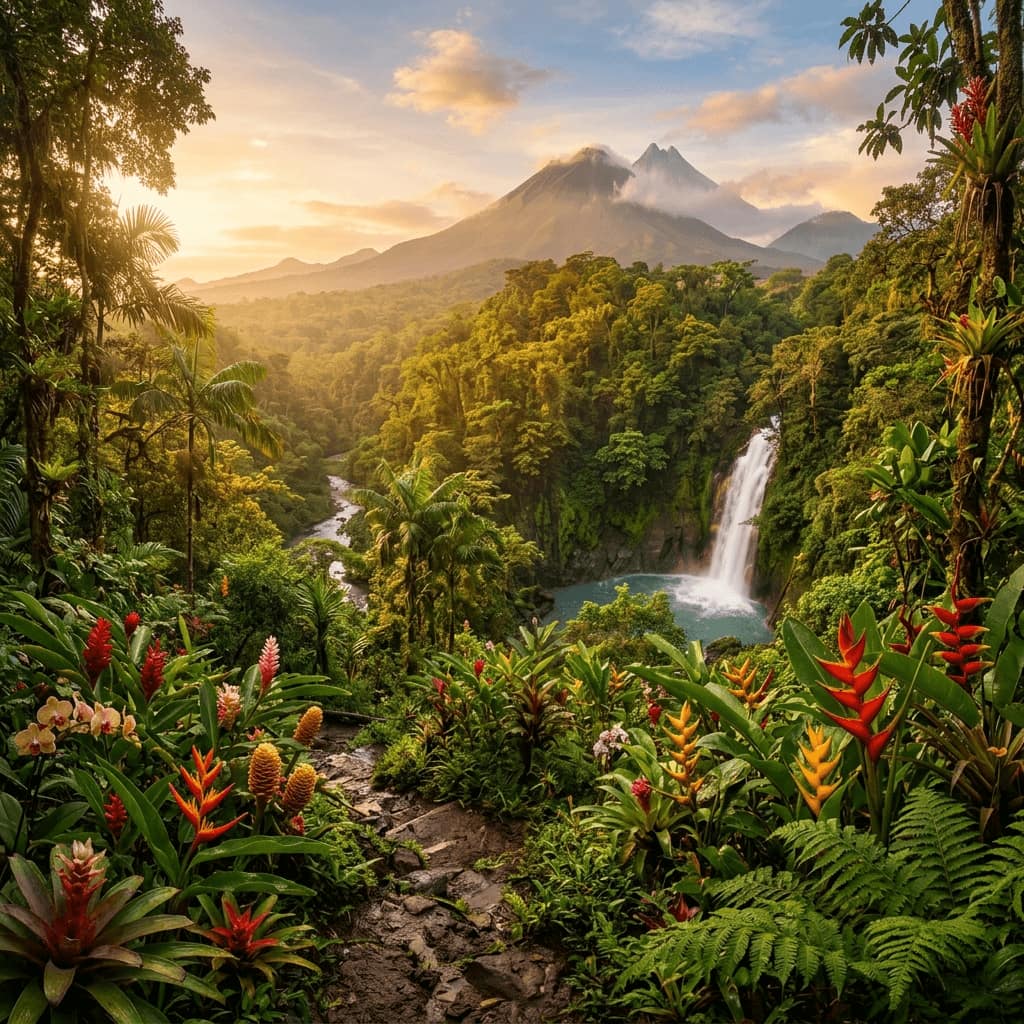
Where the world learned to travel green

Costa Rica didn't follow the eco-tourism movement — it helped invent it. Discover how this small country protects a quarter of its land, runs on clean energy, and lets you experience nature without costing it.
- 25%+ — Land protected
- ~99% — Renewable energy
- 5% — Of Earth's biodiversity
Why is Costa Rica famous for eco-tourism?
Costa Rica is considered the birthplace of modern eco-tourism. Despite covering just 0.03% of the planet's surface, it holds around 5% of the world's biodiversity, protects more than a quarter of its territory in national parks and reserves, and generates close to 99% of its electricity from renewable sources. The country reversed its deforestation and has roughly doubled its forest cover since the 1980s — a global conservation success story you can experience first-hand.
How to be a responsible visitor
Small choices add up. Here's how we help every traveler tread lightly.
Stay at certified lodges
We favor properties with the national CST sustainability certification — solar power, water recycling and real conservation commitments.
Support local communities
Local guides, independent sodas and community projects keep tourism income where it belongs — with the people who protect the land.
Respect the wildlife
Observe, never feed or touch. Our guides keep a safe, ethical distance so animals stay wild and habitats stay healthy.
Cut single-use plastic
A reusable bottle goes a long way. Tap water is safe in most regions, and refill stations are everywhere.
Stay on the trail
Marked paths protect fragile understory and nesting sites. Small footprints leave the forest for the next traveler.
Offset & go slow
Fewer, longer stays mean fewer transfers and a lighter footprint — and a richer, less rushed experience for you.
Conservation you can witness
From endangered Baird's tapirs in Corcovado to nesting sea turtles on two coasts, Costa Rica's protected wilderness is teeming and recovering. Travelers are part of the story — tourism funds the parks that keep it wild.
- Over 500,000 species call the country home
- National parks protect rainforest, cloud forest, wetland and reef
- Reforestation has brought forest cover back above 50%
- Your park fees and lodge stays directly fund protection
Eco-travel hotspots
Wild places where sustainability and spectacle meet.
Corcovado
"The most biologically intense place on Earth" — tapirs, scarlet macaws and big cats.
Monteverde
Misty cloud forest canopy, hummingbirds and the elusive resplendent quetzal.
Tortuguero
Rainforest canals and one of the planet's most important sea-turtle nesting beaches.
Rio Celeste
A surreal turquoise river and waterfall inside protected volcanic rainforest.